
An upholstery boat seat has to perform through changing weather, frequent use, and constant exposure to the marine environment. For boat owners who use their vessels throughout the season, worn seating can quickly become more than a cosmetic concern. Cracked surfaces, damaged seams, and weakened cushions can affect comfort and allow moisture to reach the internal materials. A well-planned restoration can address these issues while giving the interior a cleaner and more modern appearance. If you are considering professional marine upholstery work, you can explore services here from Boat Upholstery Broward, a company specializing in boat and yacht upholstery.
Why Seasonal Boating Can Be Hard on Seats
Boats that spend many weekends on the water experience constant interior activity.
Passengers move across seats, cushions remain exposed to sunlight, and water can enter the cockpit during normal use. Sunscreen, food, sand, and salt can also accumulate on seating surfaces.
Over several seasons, these factors may lead to:
- Faded vinyl
- Surface cracking
- Loose seams
- Compressed foam
- Staining
- Moisture damage
Regular inspection can help owners recognize these problems before they spread.
Marine Upholstery Needs the Right Materials
Standard furniture materials are rarely suitable for long-term exposure to marine conditions.
Marine-grade vinyl and other specialized products can provide stronger resistance to UV rays, moisture, and repeated cleaning. These materials also offer a practical combination of durability and comfort.
When planning an upholstery boat seat restoration, owners should consider:
- UV protection
- Water resistance
- Mold resistance
- Surface durability
- Ease of cleaning
- Color retention
Choosing materials based on the boat’s environment can significantly improve the lifespan of the finished seating.
Foam Determines How the Seat Feels
A new exterior cannot compensate for severely worn foam.
Cushions gradually lose their shape as passengers repeatedly sit on them. When foam becomes compressed, seating may feel uneven and provide less support.
Replacing the foam during an upholstery boat seat restoration can improve comfort and help the finished upholstery maintain a cleaner shape.
This is particularly valuable for boats used for long cruises, offshore fishing, or extended family outings.
Design Can Improve the Entire Interior
Updating the seats provides an opportunity to reconsider the interior’s visual style.
Owners can choose colors and textures that complement the boat’s exterior or create a completely different atmosphere. Simple changes can make the cabin or cockpit feel considerably more modern.
Popular options include:
- Two-tone seating
- Contrasting piping
- Decorative stitching
- Textured marine vinyl
- Custom embroidery
- Coordinated cushions
A practical design can look sophisticated without becoming difficult to maintain.
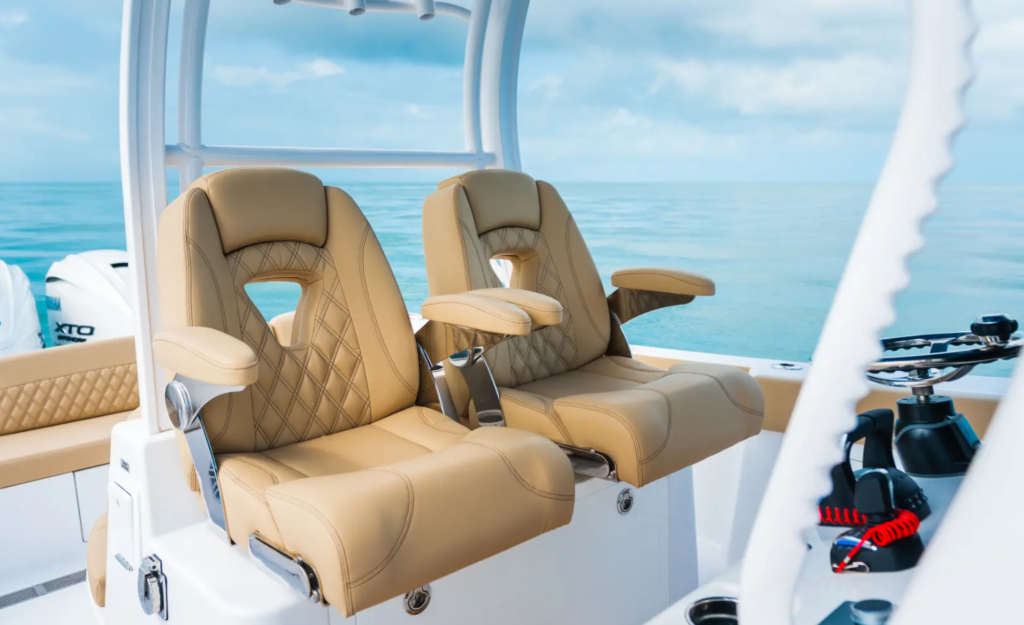
Consider Areas That Receive the Most Use
Not every seat experiences the same level of wear.
Helm seats, cockpit benches, and frequently used cushions may deteriorate faster than seating in less active areas. Identifying these high-use zones can help owners prioritize repairs and choose more durable materials where necessary.
A professional assessment can also reveal problems that are difficult to notice during a quick visual inspection.
Protect New Upholstery From Everyday Contaminants
Saltwater is not the only concern.
Sunscreen, food, drinks, dirt, and sand can also affect marine seating. Removing these contaminants regularly can help maintain the surface and reduce staining.
Boat owners should:
- Wipe seats after each outing
- Remove salt residue
- Clean spills quickly
- Dry wet cushions
- Avoid harsh household cleaners
- Use appropriate marine protection products
These habits can make a noticeable difference over time.
Storage Conditions Matter
Even an unused boat can experience upholstery damage.
Direct sunlight can continue affecting exposed materials while moisture may remain trapped inside cushions. Proper covers can reduce UV exposure, while good ventilation helps prevent moisture from becoming a persistent problem.
Owners should make sure cushions are dry before covering the boat for extended storage. This simple step can help protect an upholstery boat seat between boating trips.
Restoration Can Be a Practical Long-Term Choice
Replacing a boat simply because the interior looks worn may not always make financial sense.
If the hull, engine, and other major systems remain in good condition, restoring the seating can give the vessel a fresh appearance at a much lower level of disruption.
An upholstery boat seat project can also be completed in stages, allowing owners to focus first on the areas that need attention most.
Final Thoughts
Seasonal boating places considerable demands on marine seating. Sun, saltwater, moisture, and frequent passenger use can gradually affect both appearance and comfort.
A carefully planned upholstery boat seat restoration can address worn surfaces, improve cushioning, and create a more attractive interior. With marine-grade materials and consistent maintenance, boat owners can keep their seating ready for another season of comfortable adventures on the water.