
An older boat does not necessarily need a complete renovation to feel modern again. In many cases, refreshing the seating, replacing worn cushions, and updating interior finishes can make a remarkable difference. These improvements can change how passengers experience the vessel while helping owners preserve its original character. Choosing suitable boat seat materials is an important part of the process because marine upholstery must combine attractive design with resistance to demanding conditions. Owners considering a seating upgrade can find professional assistance through Boat Upholstery Fort Lauderdale, which specializes in upholstery for boats and yachts.
Recognizing the Signs of an Aging Interior
Marine interiors gradually show signs of use. Constant sunlight can fade upholstery, while salt, moisture, and friction may contribute to surface deterioration. Cushions can also lose their shape after years of repeated use.
Some problems are primarily cosmetic, but others indicate that the seating needs more extensive attention. Cracked surfaces, loose seams, uneven cushions, and damaged foam can affect both appearance and comfort.
Before starting a renovation, owners should inspect every seating area. This makes it easier to identify which components need replacement and which can still be restored.
Updating Materials Without Changing the Entire Layout
One advantage of upholstery renovation is the opportunity to improve an interior without redesigning the entire vessel.
Existing seat frames and layouts may remain perfectly functional even when their coverings look outdated. Replacing the upholstery can introduce new colors, textures, and finishing details while preserving the original arrangement.
Modern boat seat materials offer a wide range of design possibilities. Owners can choose understated neutral shades, textured finishes, or contrasting panels that give familiar seating a more contemporary appearance.
This approach can be especially useful for boats whose original layouts remain practical but whose interiors no longer reflect the owner’s preferences.
Foam Replacement Can Make a Major Difference
New upholstery alone cannot solve every seating problem. The foam underneath the covering plays an equally important role in comfort and appearance.
After years of use, cushioning may become compressed, uneven, or less supportive. Installing a new cover over deteriorated foam can leave the seat looking better temporarily without addressing the underlying issue.
A renovation should include an assessment of cushion thickness, density, shape, and condition. Different seating areas may also require different levels of support.
Combining suitable foam with quality boat seat materials can restore the structure of older cushions and make longer journeys more comfortable.
Selecting Coverings for Marine Conditions
A boat’s interior faces conditions that ordinary household furniture rarely encounters. Sunlight, humidity, salt spray, and frequent cleaning all influence upholstery performance.
Marine-grade vinyl remains a common option because it is available in numerous colors and textures and can offer practical moisture and UV resistance. Specialized marine fabrics provide another choice for owners interested in softer finishes and distinctive patterns.
However, not every product is appropriate for every location. Exposed cockpit seats require different protection from cushions inside a covered cabin.
When selecting boat seat materials, owners should review manufacturer specifications and consider the actual conditions each seating area experiences.
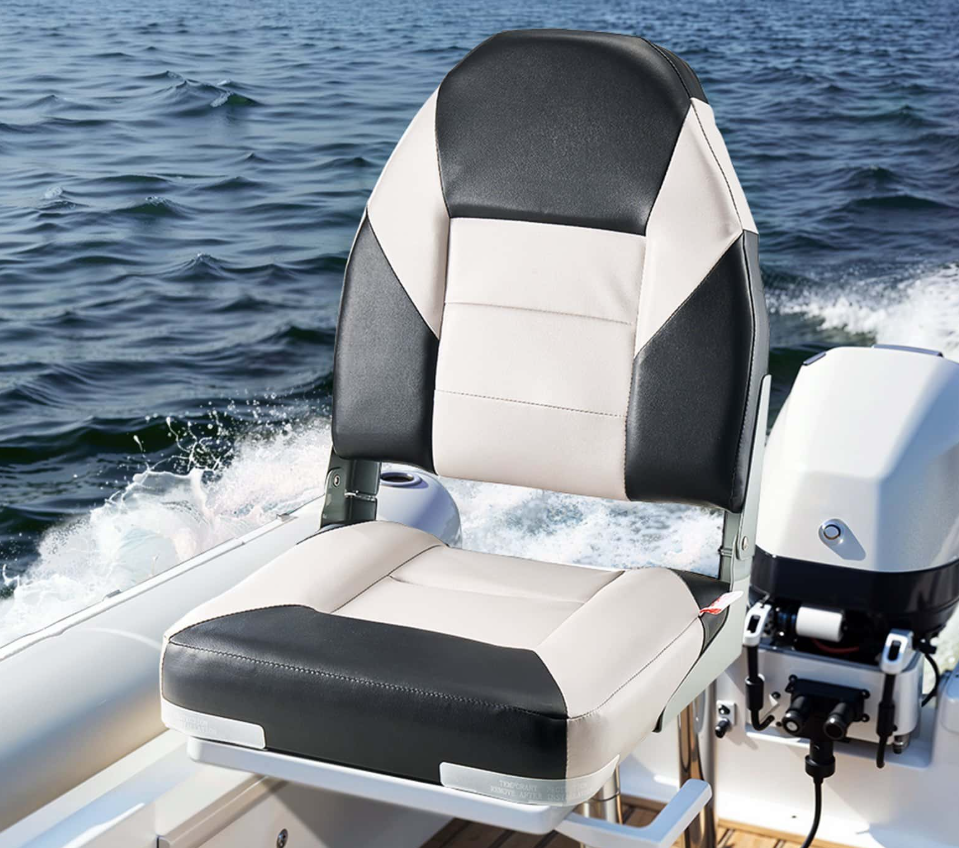
Small Design Details Can Transform the Result
A successful restoration does not depend on expensive materials alone. The finishing details often determine whether the interior feels coordinated and professionally completed.
Contrasting stitching, decorative piping, shaped panels, and carefully selected textures can give older seating a fresh identity. Neutral colors can create a brighter atmosphere, while darker accents add definition.
Owners should also consider how the new upholstery will look alongside existing flooring, dashboards, wall panels, and hardware.
The goal is to create a consistent design rather than simply replace every old surface with a different color.
Why Professional Measurements Matter
Boat seating often includes curved surfaces, unusual angles, and custom cushion shapes. Standard furniture patterns may not fit these areas correctly.
Accurate measurements and templates help ensure that new covers follow the original contours. Proper fitting also reduces unnecessary tension around seams and corners.
Professional installation becomes particularly valuable when a project involves multiple cushions, complex seating arrangements, or customized decorative details.
Even high-quality boat seat materials can produce disappointing results if the covers are poorly measured or installed.
Protecting the Restored Interior
Once the renovation is complete, regular maintenance helps preserve the new appearance.
Owners should remove salt residue after trips, clean spills promptly, and use products approved for their specific upholstery. Wet cushions should dry thoroughly before storage.
Protective covers can also reduce exposure when the boat remains unused. Periodic inspections help identify small issues such as loose stitching or damaged seams before they become more serious.
These habits allow boat seat materials to perform as intended and help owners protect the results of their renovation.
Final Thoughts
Restoring an older boat interior is an opportunity to improve comfort, refresh its appearance, and extend the usefulness of existing seating. A carefully planned project can preserve the vessel’s familiar layout while introducing more modern finishes and better cushioning.
Choosing appropriate boat seat materials, inspecting internal foam, and paying attention to installation quality all contribute to a successful result. With the right approach, even an aging marine interior can become a more attractive and comfortable place to spend time on the water.